
If you are publishing content but getting zero visitors, the answer to one question will change everything — what is SEO in digital marketing? SEO is the free, proven method that gets your website in front of the right people on Google — without paying for a single ad. Once you understand it, you will never look at your website the same way again.
Understanding what is SEO in digital marketing is no longer optional in 2026 — it is the foundation of every successful website, blog, and online business. This complete beginner’s guide explains exactly how SEO works, the four types you need to know, and 7 actionable tips to start ranking on Google and getting consistent free traffic today.
What is SEO in Digital Marketing — Simple Explanation
Let’s start with the basics.
What is SEO in digital marketing? SEO stands for Search Engine Optimization. It is the process of improving your website so Google shows it to more people — for free. No ads. No paid promotions. Just smart, consistent optimization.
Think of it this way:
- Millions of people search Google every single day
- They click on the first few results they see
- If your website is not on Page 1, they will never find you
That is exactly why understanding what is SEO in digital marketing is one of the most important things every website owner, blogger, and business must do in 2026.
For more detailed beginner guidance, you can also read this Beginner’s SEO Guide by Moz
How SEO Works — Step by Step
To fully understand what is SEO in digital marketing, you need to know how Google actually processes and ranks content.
Google follows three main steps:
Step 1 — Crawling
Google sends automated bots — called crawlers — to scan your website and discover new content. These bots read everything on your pages including text, images, and links.
Step 2 — Indexing
After crawling, Google stores your content in its massive database. This is called indexing. If your content is indexed, it can appear in search results when someone searches a relevant topic.
Step 3 — Ranking
Google then ranks all indexed pages based on hundreds of factors — content quality, keywords, backlinks, website speed, and user experience.
The better your SEO, the higher your ranking. The higher your ranking, the more free, consistent traffic you receive.
4 Types of SEO in Digital Marketing
1. On-Page SEO
On-page SEO focuses on optimizing the content and structure of your website pages. This is the type most beginners start with — and it has the most direct impact on your rankings.
Key elements include:
- Using the right keywords naturally throughout your content
- Writing high-quality, genuinely helpful articles
- Optimizing headings (H1, H2, H3) correctly
- Adding descriptive alt text to images
- Writing strong meta titles and descriptions
- Improving readability and overall content structure
2. Off-Page SEO
Off-page SEO focuses on building your website’s authority through activities that happen outside your own site.
Key elements include:
- Building quality backlinks from other relevant websites
- Guest posting on trusted blogs in your niche
- Social media sharing and engagement
- Quora answers and forum participation
- Brand mentions across the web
3. Technical SEO
Technical SEO improves the backend performance and structure of your website — the parts users do not see but Google pays close attention to.
Key elements include:
- Fast page loading speed
- Mobile-friendly responsive design
- Secure website (HTTPS)
- Clean, readable URL structure
- XML sitemap submission to Google
- Fixing broken links and crawl errors
4. Local SEO
Local SEO helps businesses appear in location-based searches — essential for any business serving a specific city or region.
Key elements include:
- Google Business Profile optimization
- Local keyword targeting (e.g. “web design Lahore”)
- Collecting local reviews and ratings
- NAP consistency — Name, Address, Phone number across all listings
All four types work together. Ignoring any one of them limits how high your website can rank.
Why SEO is Important in Digital Marketing
Understanding what is SEO in digital marketing becomes even clearer when you see the numbers. Websites on Page 1 of Google receive over 90% of all clicks. Page 2 gets almost none.
Key benefits of SEO:
- Free traffic — no need to pay for every click like with ads
- Long-term results — one well-optimized article can bring traffic for years
- Builds trust — users trust organic results more than paid ads
- Better user experience — SEO forces you to create cleaner, more helpful content
- Higher ROI — compared to paid advertising, SEO compounds over time
- Competitive advantage — outrank competitors without outspending them
Without SEO, your website is invisible. With it, your website becomes an asset that works for you 24 hours a day — even while you sleep.
SEO in Business — Real Impact
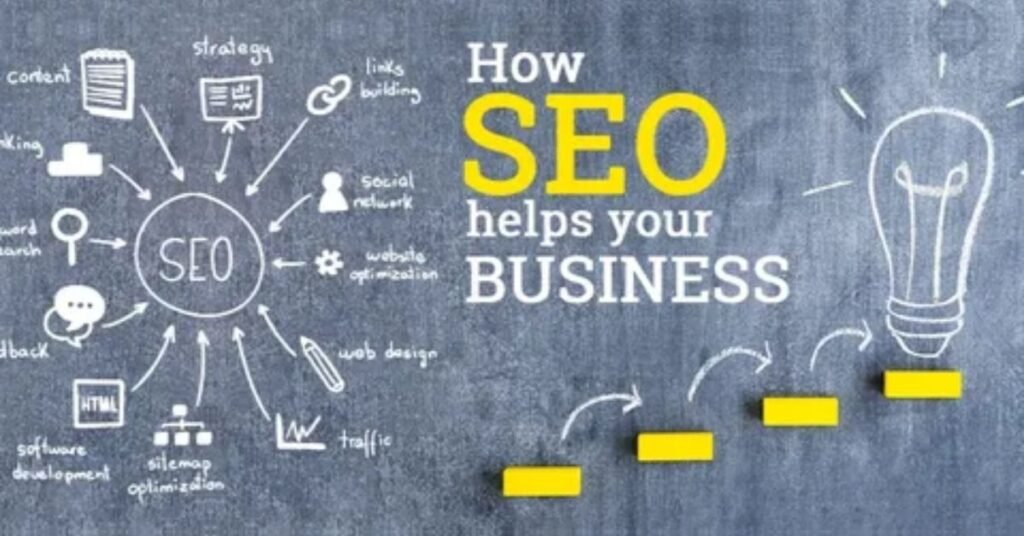
Many beginners ask about the real business impact of SEO. Here is a simple real-world example that shows exactly why what is SEO in digital marketing matters:
- A customer searches “best digital marketing services in Pakistan”
- Google shows your website on Page 1
- Customer clicks your link and reads your content
- They contact you and become a client
- You earned a new customer — without spending a single rupee on ads
This happens consistently with good SEO. It is not a one-time result — it compounds every month as your content builds more authority and reaches more people.
SEO Comparison Table — Types and Purpose
| SEO Type | Main Focus | Key Example |
| On-Page SEO | Content optimization | Keywords, headings, meta tags |
| Off-Page SEO | Authority building | Backlinks, guest posting |
| Technical SEO | Website performance | Speed, mobile-friendly, HTTPS |
| Local SEO | Location-based ranking | Google Business Profile |
How to Start SEO in 2026 — Step-by-Step Guide
Now that you understand what is SEO in digital marketing, here is exactly how to start:
Step 1 — Do Keyword Research First
Find out what your audience is actually searching for before writing a single word. Use tools like:
- Google Keyword Planner — free and reliable
- Ubersuggest — good for beginners
- Ahrefs or SEMrush — more advanced, paid options
Target keywords with decent search volume but manageable competition — especially when you are just starting out.
Step 2 — Create High-Quality, Helpful Content
Write articles that genuinely answer your reader’s questions. Google’s entire goal is to show users the most helpful content — so the more useful your content, the more Google rewards it.
For a complete, up-to-date approach to SEO and content strategy together, this guide on SEO and digital marketing in 2026 is worth reading alongside this one.
Step 3 — Optimize On-Page Elements
- Use your focus keyword in the title, first paragraph, and at least 2-3 headings
- Write a compelling meta description under 160 characters
- Add images with descriptive alt text
- Use short paragraphs and clear formatting throughout
Step 4 — Improve Website Speed
A slow website loses visitors and rankings. Use Google PageSpeed Insights to identify and fix speed issues. Aim for a loading time under 3 seconds on mobile.
Step 5 — Build Backlinks Consistently
Get links from other websites pointing back to yours. Start with:
- Answering questions on Quora with a link to your article
- Guest posting on relevant blogs in your niche
- Sharing content on Pinterest and social media
- Getting mentioned in roundup articles
Step 6 — Track, Measure, and Improve
Use Google Search Console and Google Analytics to monitor your performance. Check which articles are ranking, what keywords are bringing traffic, and which pages need improvement.
7 Best SEO Tips for Beginners in 2026
These 7 tips will help you understand and apply what is SEO in digital marketing faster than most beginners:
Tip 1 — Focus on User Intent Always write content that answers what the user is actually searching for — not just what you want to say. Google ranks content that satisfies intent.
Tip 2 — Use Keywords Naturally Never stuff keywords into your content. Write naturally and place keywords where they fit organically — in titles, headings, and throughout the body.
Tip 3 — Write Simple and Clear Content Short sentences. Short paragraphs. Easy words. Google loves content that is easy to read and understand — and so do your readers.
Tip 4 — Update Your Content Regularly Old content loses rankings over time. Revisit your articles every few months, update statistics, improve writing, and add new information to keep them fresh.
Tip 5 — Optimize for Mobile Over 70% of all Google searches happen on mobile devices. Make sure your website loads fast and looks great on smartphones — this is non-negotiable in 2026.
Tip 6 — Build Backlinks Every Week Backlinks are one of Google’s strongest ranking signals. Dedicate time every week to building quality links through Quora, guest posting, and content sharing.
Tip 7 — Be Patient and Stay Consistent SEO takes time. Most websites start seeing real results after 3 to 6 months of consistent effort. The results compound — do not give up before they arrive.
Best Free SEO Tools for Beginners in 2026
| Tool | Purpose | Cost |
| Google Search Console | Track rankings and errors | Free |
| Google Analytics | Monitor traffic and behavior | Free |
| Ubersuggest | Keyword research and site audit | Free/Paid |
| Ahrefs | Backlink analysis | Paid |
| RankMath | WordPress SEO plugin | Free/Paid |
| PageSpeed Insights | Website speed testing | Free |
Start with the free tools — they are more than enough to get real results as a beginner.
Common SEO Mistakes Beginners Must Avoid
While learning what is SEO in digital marketing, avoid these mistakes that hold most beginners back:
- Keyword stuffing — using keywords too many times looks unnatural and hurts rankings
- Copying content — duplicate content is heavily penalized by Google
- Ignoring mobile users — most of your traffic comes from phones
- Not updating old content — outdated articles slowly lose rankings
- Skipping meta descriptions — these directly affect your click-through rate
- Building spammy backlinks — one quality backlink beats ten low-quality ones
- Expecting overnight results — SEO is a long-term investment, not a quick fix
Avoiding these mistakes alone puts you ahead of the majority of beginners who start SEO without proper guidance.
SEO vs Paid Advertising — Which Is Better?
| Factor | SEO | Paid Ads |
| Cost | Free (time investment) | Pay per click |
| Results | Takes 3–6 months | Immediate |
| Long-term | Yes — lasts for years | Stops when budget ends |
| Trust level | Higher — organic results | Lower — marked as ad |
| Best for | Long-term sustainable growth | Quick promotions |
For long-term, sustainable growth, SEO always wins. As web development and digital products continue evolving, SEO remains the most cost-effective way to drive consistent traffic — to understand how these trends connect, this guide on the future of web development in 2026 shows how SEO fits into the bigger digital picture.
Conclusion
Now you have a complete, practical understanding of what is SEO in digital marketing and how it works in 2026.
SEO is not just a skill — it is a long-term investment. Every article you optimize, every backlink you earn, every keyword you target — it all compounds over time and brings you consistent, free traffic for months and years.
Whether you are a blogger, freelancer, or business owner, what is SEO in digital marketing is the question whose answer keeps paying you back long after the initial work is done. Start applying even one or two of the tips from this guide today, and you will be ahead of most people who are still trying to figure it out.
Start today — pick one article on your site, apply the on-page SEO tips from this guide, and submit it to Google Search Console. That single action puts you on the path to consistent organic traffic in 2026.
FAQs
What is SEO in digital marketing in simple words?
SEO — Search Engine Optimization — is the process of improving your website so Google shows it to more people for free. It involves optimizing your content, website structure, and building authority so you rank higher in search results without paying for ads.
What are the four main types of SEO in digital marketing?
The four types are On-Page SEO (content optimization), Off-Page SEO (backlinks and authority), Technical SEO (website performance and structure), and Local SEO (location-based ranking). All four work together for the best results.
How long does SEO take to show results?
SEO typically takes 3 to 6 months to show significant results. With consistent effort — publishing quality content, building backlinks, and optimizing pages — results improve steadily over time and compound month after month.
Can beginners do SEO themselves without hiring an expert?
Absolutely. SEO is learnable by anyone willing to be consistent. Start with keyword research, write quality content, optimize your pages, and build backlinks gradually. Free tools like Google Search Console and Ubersuggest make it accessible for complete beginners.
What is the salary of an SEO professional in Pakistan in 2026?
SEO is a high-demand skill in Pakistan. Entry-level SEO professionals earn PKR 50,000 – 100,000 per month. Experienced SEO experts earn PKR 150,000 – 500,000+ per month. Freelance SEO consultants working with international clients can earn significantly more depending on their portfolio and niche.
Pingback: Complete Guide to Mobile App Development in Pakistan – Top 10 Companies