
If you want a high-income, future-proof career in 2026, mastering SEO and digital marketing is one of the smartest moves you can make. Every business — from a small shop in Lahore to a global company in New York — needs an online presence. And the professionals who know how to build and grow that presence are in massive demand right now.
This complete guide covers everything: what SEO and digital marketing actually mean, how they work, which jobs are available, and how you can start learning today — even with zero experience.
What is SEO and Digital Marketing?
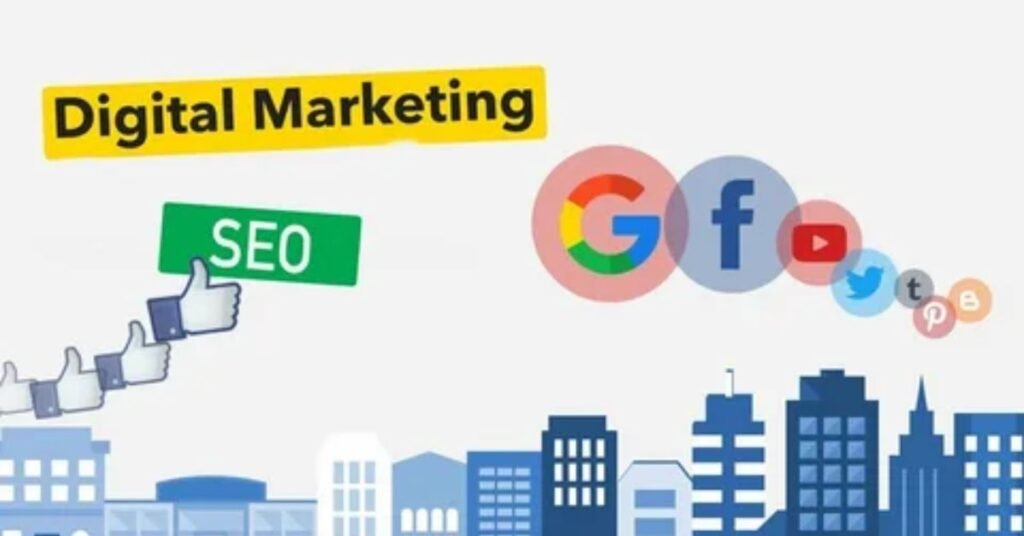
SEO (Search Engine Optimization) is the process of improving your website so it ranks higher on Google. When someone searches for something, the websites on page one get almost all the clicks. SEO is how you get there.
Digital marketing is the broader strategy. It includes every method a business uses to promote itself online — social media, email campaigns, paid ads, content creation, and yes, SEO too.
Together, SEO and digital marketing give businesses the power to reach millions of people online — without spending a fortune on traditional advertising. That is why companies across every industry are actively hiring people with these skills.
If you want to understand how SEO fits into the bigger picture, check out this detailed breakdown: What Is SEO in Digital Marketing.
How Does SEO Work? A Simple Explanation
Here is what happens every time someone searches on Google:
- A user types a keyword or question into the search bar
- Google’s algorithm scans billions of web pages in milliseconds
- It ranks pages based on relevance, content quality, and trustworthiness
- The most optimized pages appear at the top
- Users click the top results — and that is where the traffic goes
Your job as an SEO professional is to make sure your website checks all the boxes Google looks for. This means solid keyword research, quality content, fast loading speed, mobile-friendliness, and strong backlinks from trusted sites.
4 Main Types of SEO You Must Know
Every SEO and digital marketing professional needs to understand these four types. Each plays a different role in improving your website’s visibility.
1. On-Page SEO
On-page SEO covers everything you do directly on your website to improve rankings. This includes:
- Writing keyword-rich, helpful content
- Using proper heading tags (H1, H2, H3)
- Optimizing your meta title and meta description
- Adding internal links between your pages
- Using descriptive alt text on images
On-page SEO is completely in your control, which makes it the ideal starting point for beginners.
2. Off-Page SEO
Off-page SEO refers to actions taken outside your website to build its authority. The most important activity here is link building — getting other trusted websites to link back to yours. When reputable sites link to your content, Google treats your website as more trustworthy and ranks it higher. Guest posting, brand mentions, and social media shares also fall under off-page SEO.
3. Technical SEO
Technical SEO is about making sure your website works properly behind the scenes. This includes improving page speed, making your site mobile-friendly, fixing broken links, creating an XML sitemap, and ensuring Google can crawl and index your pages without problems. Even the best content will not rank if your site has serious technical issues.
4. Local SEO
Local SEO is specifically for businesses that serve customers in a particular area. If you run a restaurant in Karachi or a clothing store in Islamabad, local SEO helps you appear when nearby customers search for your services. This involves optimizing your Google My Business profile, using location-based keywords, and collecting local reviews.
SEO vs Digital Marketing: What is the Difference?
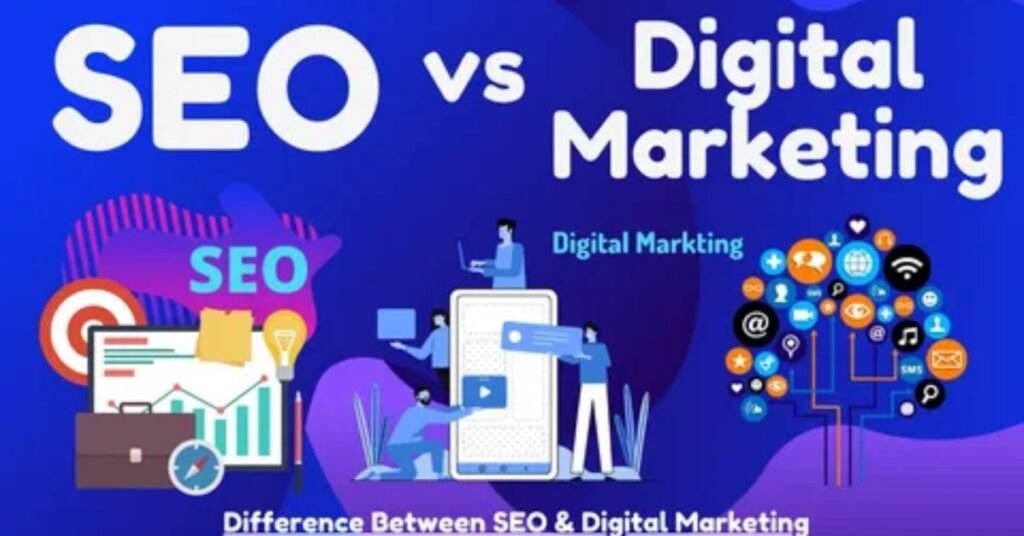
Many people use these terms interchangeably, but they are not the same thing. Here is a clear comparison:
| Feature | SEO | Digital Marketing |
| Scope | A part of digital marketing | The complete online marketing strategy |
| Traffic Type | Organic (free) traffic | Both paid and organic traffic |
| Main Tools | Keywords, backlinks, content | Ads, email, social media, SEO |
| Time for Results | Slower but long-lasting | Faster with paid ads |
| Cost | Lower long-term cost | Can be expensive with paid ads |
| Skills Needed | Technical + content writing | Multiple skills across channels |
The key takeaway: SEO is a powerful long-term strategy, while digital marketing gives you a full toolkit that includes both quick wins and slow-burn results.
7 Types of Digital Marketing You Should Know
Digital marketing is not just about running ads. It covers a wide range of channels and strategies:
- Search Engine Optimization (SEO) — Getting free, targeted traffic from Google through optimized content
- Social Media Marketing — Growing your audience on Instagram, Facebook, LinkedIn, and TikTok
- Content Marketing — Creating blogs, videos, and guides that attract and educate your audience
- Email Marketing — Building a subscriber list and sending targeted messages that drive sales
- Affiliate Marketing — Earning commissions by promoting other companies’ products
- Influencer Marketing — Partnering with online personalities to promote your brand
- Paid Advertising (PPC) — Running Google or social media ads where you pay per click
You do not need to master all seven at once. Pick one or two, get good at them, and build from there.
The 4 Pillars of a Successful Digital Marketing Strategy
Every strong digital marketing campaign rests on four core pillars. If any one of them is weak, your results will suffer.
Pillar 1: Content
Content is the foundation of everything in SEO and digital marketing. Without useful, well-written content, there is nothing for Google to rank and nothing for your audience to engage with. Your content should answer real questions, solve real problems, and be noticeably better than what competitors have published.
Pillar 2: SEO
Even the best content is useless if nobody finds it. SEO makes sure your content reaches the right people at the right time — through keyword research, on-page optimization, and consistent link building.
Pillar 3: Social Media
Social media amplifies your content and helps build a loyal community around your brand. Platforms like YouTube, Instagram, and LinkedIn are powerful tools for driving new traffic back to your website.
Pillar 4: Analytics
Analytics is how you measure whether your strategy is actually working. Tools like Google Analytics and Google Search Console show you exactly where your traffic comes from, which pages perform best, and where you need to improve. Without data, you are just guessing.
SEO and Digital Marketing Jobs in 2026
The demand for SEO and digital marketing professionals has never been higher. Here are the most in-demand roles and salary ranges in Pakistan:
| Job Title | Main Responsibilities | Avg. Salary (PKR/month) |
| SEO Specialist | Keyword research, on-page optimization, link building | 50,000 – 120,000 |
| Digital Marketing Manager | Strategy, campaign management, team leadership | 80,000 – 200,000 |
| Content Writer / Strategist | Blog writing, content planning, SEO writing | 35,000 – 100,000 |
| Social Media Manager | Content creation, engagement, ad management | 40,000 – 90,000 |
| PPC Specialist | Google Ads, Facebook Ads, campaign optimization | 60,000 – 150,000 |
| Email Marketing Specialist | Campaign design, automation, list management | 45,000 – 110,000 |
Freelancing is a massive opportunity too. Many Pakistani digital marketers earn in US dollars by working with international clients on platforms like Upwork and Fiverr. A skilled SEO specialist can realistically earn $500 to $3,000 per month as a freelancer — from home.
How to Learn SEO and Digital Marketing in 2026 — Step by Step
The great news is that you do not need a degree to get started. Here is a practical roadmap for beginners:
- Learn the basics — Start with free resources from Google’s Digital Garage, HubSpot Academy, and YouTube. If you want a more structured approach with hands-on tools, this Digital Marketing Tools Course on Udemy is a great option to fast-track your learning.
- Build your own website or blog — Practice beats theory every time. Apply what you learn on a real project.
- Master free tools — Get comfortable with Google Search Console, Google Analytics, and Ubersuggest before spending money on paid tools.
- Study your competitors — Look at what top-ranking websites in your niche are doing and learn from them.
- Build a portfolio — Document your results with screenshots and case studies to show potential clients or employers.
- Get certified — Certificates from Google, HubSpot, or SEMrush add real credibility to your profile and help you stand out.
- Start freelancing or apply for jobs — Once you have skills and a portfolio, start earning.
If you want to go deeper into the technical side, exploring web development courses in Pakistan can give you an extra edge — especially for technical SEO roles.
Actionable Tips to Actually Succeed
Learning theory is just the beginning. Here are tips that make a real difference:
- Focus on quality over quantity. One in-depth, well-researched article beats ten thin ones every time.
- Write for humans first. Use keywords naturally. Keyword stuffing actively hurts your rankings.
- Be consistent. SEO is a long game. Post regularly, update old content, and keep building backlinks month after month.
- Stay updated. Google updates its algorithm hundreds of times per year. Follow blogs like Moz, Ahrefs, and Search Engine Journal to keep up.
- Track everything from day one. Set up Google Analytics immediately so you have data to learn from.
- Build your network. Join online communities, follow industry experts, and learn from people already succeeding in the field.
Conclusion
SEO and digital marketing are no longer optional skills — they are essential for anyone who wants to thrive in the modern economy. Whether your goal is a stable 9-to-5 job, a freelance career with international clients, or your own online business, these skills give you real leverage.
The best time to start was yesterday. The second-best time is right now.
Pick one skill from this guide. Commit to it for 30 days. You will be surprised how fast things move when you stay consistent.
Stay curious, keep learning, and remember — every expert was once exactly where you are today.
Frequently Asked Questions (FAQs)
What is the difference between SEO and digital marketing?
SEO is one specific part of digital marketing — it focuses on getting free, organic traffic from search engines. Digital marketing is the broader strategy that includes SEO, social media, email campaigns, paid advertising, and more.
Can I learn SEO and digital marketing for free?
Yes, absolutely. Google’s Digital Garage, HubSpot Academy, YouTube tutorials, and industry blogs like Moz and Ahrefs are excellent free resources. Most beginners get a strong foundation without spending a single rupee.
How long does it take to see results from SEO?
Most websites start seeing noticeable results within three to six months of consistent effort. The exact timeline depends on your niche, the competition level, and how regularly you publish and update content.
Is digital marketing a good career in 2026?
Yes — it is one of the fastest-growing career fields right now. More businesses are moving online every day, and the demand for skilled digital marketers is rising both in Pakistan and internationally. It is also a career you can start as a freelancer with minimal upfront investment.
What skills do I need to get a digital marketing job?
Start with keyword research, content writing, basic analytics, and an understanding of how SEO works. Social media management and a familiarity with paid ads are useful additions. You do not need to master everything at once — pick one skill, get good at it, and grow from there.