
Most people spend more time choosing a phone than doing a proper Pros and Cons Career Analysis for their future career. And then they wonder why they feel stuck, underpaid, and unfulfilled five years later.
If you are standing at a crossroads right now — confused about which direction to go — you need a proper pros and cons career analysis before making any decision.
This guide will walk you through exactly how to analyze any career path smartly, avoid common mistakes, and confidently choose the right direction in 2026.
Let’s get started.
What are the Pros and Cons Career Analysis?
Before we dive deep, let’s understand what this actually means.
Pros and cons career analysis is a structured method of evaluating any career option by listing its benefits and drawbacks side by side. It helps you see the full picture — not just the glamorous parts.
Think of it like test-driving a car before buying it.
You wouldn’t spend your savings without knowing how the car performs, right? The same logic applies to your career. Doing this properly saves you from years of regret.
Why Career Analysis Matters More Than Ever in 2026

The job market in 2026 looks very different from even five years ago.
AI is replacing roles. New industries are emerging. Remote work has changed everything. And the cost of choosing the wrong path has never been higher — financially or emotionally.
Why career decisions feel confusing is because most people lack structured thinking. Without asking the right questions, choices become emotional instead of logical.
As highlighted by Forbes, asking the right questions is key to making better career decisions and avoiding long-term regret:
Here’s why doing a thorough pros and cons career analysis is absolutely essential right now:
- Job roles are changing faster than ever before
- Skills that were in demand in 2020 may already be outdated
- The rise of freelancing means more career options — but also more confusion
- Mental health and work-life balance are now just as important as salary
Without analysis, you are essentially guessing. And guessing with your career is one of the most expensive mistakes a person can make.
How to Do a Proper Pros and Cons Career Analysis
Here is a simple, step-by-step process anyone can follow.
Step 1: List All Your Career Options
Start by writing down every career path you are considering. Don’t filter yet. Just list them all — whether it’s software engineering, content writing, teaching, finance, or anything else.
Give yourself permission to think big at this stage.
Step 2: Research Each Option Deeply
Surface-level knowledge is dangerous. You might think a career looks amazing from the outside — but dig deeper and find it’s highly stressful or offers limited growth.
For each option, research:
- Average salary range (entry-level to senior)
- Job availability and market demand in 2026
- Required education and skill investment
- Work-life balance and daily routine
- Long-term growth potential
Step 3: Build Your Pros and Cons List
Now comes the core of your pros and cons career analysis.
For each career option, make two columns:
Pros (Benefits):
- High salary potential
- Strong job market demand
- Flexible or remote work options
- Personal passion alignment
- Clear promotion path
- Short learning curve
Cons (Drawbacks):
- High stress or pressure
- Long working hours
- Expensive education required
- Limited creativity or autonomy
- Slow salary growth at the entry level
- High competition in the field
Step 4: Assign Weight to Each Factor
Not all pros and cons are equal.
For example, if work-life balance is your top priority, a high-paying but 70-hour-per-week job might score poorly for you, even if it looks amazing on paper.
Weight each factor based on what matters most to you — not what society says should matter.
Step 5: Make Your Decision With Confidence
After weighing everything, the right path usually becomes clearer than you expected.
Trust the process. A well-done analysis doesn’t just give you an answer — it gives you clarity and confidence in that answer.
Top Career Paths in 2026: Pros and Cons Breakdown
Let’s apply this framework to some of the most popular career choices in 2026.
1. Software Development / Tech Careers
Pros:
- Very high salary potential globally
- Strong remote work opportunities
- Massive job demand — still growing
- Multiple specializations available (AI, cybersecurity, cloud)
Cons:
- Requires continuous learning and upskilling
- Can be mentally exhausting and high-pressure
- Competitive field with many applicants
- The initial learning curve is steep for non-tech backgrounds
Verdict: Great long-term investment if you enjoy problem-solving and don’t mind constant learning.
2. Digital Marketing & Content Creation
Pros:
- Low barrier to entry — can start with free tools
- Growing demand across every industry
- Creative and flexible work environment
- Freelance and remote opportunities are abundant
Cons:
- Salary growth can be slow at the entry level
- Industry changes rapidly — you must stay updated
- Results can be hard to measure early on
- Highly saturated in some niches
Verdict: Excellent for creative personalities who want flexibility and are willing to build skills consistently.
3. Healthcare & Medical Careers
Pros:
- Job security is extremely high
- Emotionally rewarding work
- Respected profession globally
- Diverse specialization options
Cons:
- Requires years of expensive education
- Physically and emotionally demanding
- High-pressure environment with real stakes
- Limited flexibility in early career stages
Verdict: Worth it if you have a genuine passion for helping people and are prepared for the long educational journey.
4. Finance & Accounting
Pros:
- Strong, stable salary
- High demand in every country and industry
- Clear career progression path
- Prestigious professional certifications (CFA, CPA) boost earnings significantly
Cons:
- Can be repetitive and detail-heavy
- Stressful during peak seasons (tax season, audits)
- Requires continuous compliance with changing regulations
- Work-life balance can suffer at top firms
Verdict: Ideal for analytical minds who value stability and structured growth.
5. Teaching & Education
Pros:
- Deeply meaningful and impactful work
- Good job security in most regions
- Long holidays and manageable hours
- Growing demand for online educators and trainers
Cons:
- Salaries are often lower than in private sector roles
- Emotionally taxing — especially in under-resourced environments
- Limited salary growth in traditional settings
- Undervalued in many countries despite the importance of the work
Verdict: Perfect for those driven by purpose over paycheck — and increasingly profitable in the online education space.
Career Analysis Comparison Table
Here is a quick snapshot to help you compare your options easily:
| Career Path | Salary Potential | Job Security | Work-Life Balance | Growth Potential | Entry Difficulty |
| Software Development | ⭐⭐⭐⭐⭐ | ⭐⭐⭐⭐⭐ | ⭐⭐⭐ | ⭐⭐⭐⭐⭐ | High |
| Digital Marketing | ⭐⭐⭐ | ⭐⭐⭐⭐ | ⭐⭐⭐⭐⭐ | ⭐⭐⭐⭐ | Low |
| Healthcare | ⭐⭐⭐⭐ | ⭐⭐⭐⭐⭐ | ⭐⭐ | ⭐⭐⭐⭐ | Very High |
| Finance | ⭐⭐⭐⭐ | ⭐⭐⭐⭐ | ⭐⭐⭐ | ⭐⭐⭐⭐ | Medium |
| Teaching | ⭐⭐ | ⭐⭐⭐⭐ | ⭐⭐⭐⭐⭐ | ⭐⭐⭐ | Low-Medium |
Common Mistakes People Make Without Career Analysis
Skipping pros and cons career analysis leads to predictable and painful mistakes.
Here are the most common ones:
Mistake 1: Choosing Based on Salary Alone
Money matters. But a high-paying job you hate is not a success — it’s a golden cage.
People who choose purely for salary often burn out within two to three years and end up switching anyway — but now they’ve lost time and momentum.
Mistake 2: Following What’s Trending
Just because AI or crypto or real estate is hot right now doesn’t mean it’s right for you.
Trends fade. Your skills and interests are more durable than any trend.
Mistake 3: Listening to Everyone Except Yourself
Family pressure, peer comparison, and social media influence cause more career mistakes than almost anything else.
Other people’s opinions are based on their own fears and experiences — not your potential.
Mistake 4: Not Considering Lifestyle Fit
A career isn’t just a job. It shapes your entire lifestyle — your daily routine, stress levels, relationships, health, and happiness.
A thorough career evaluation considers the whole picture — not just the paycheck.
How to Use Pros and Cons Career Analysis for Career Switching
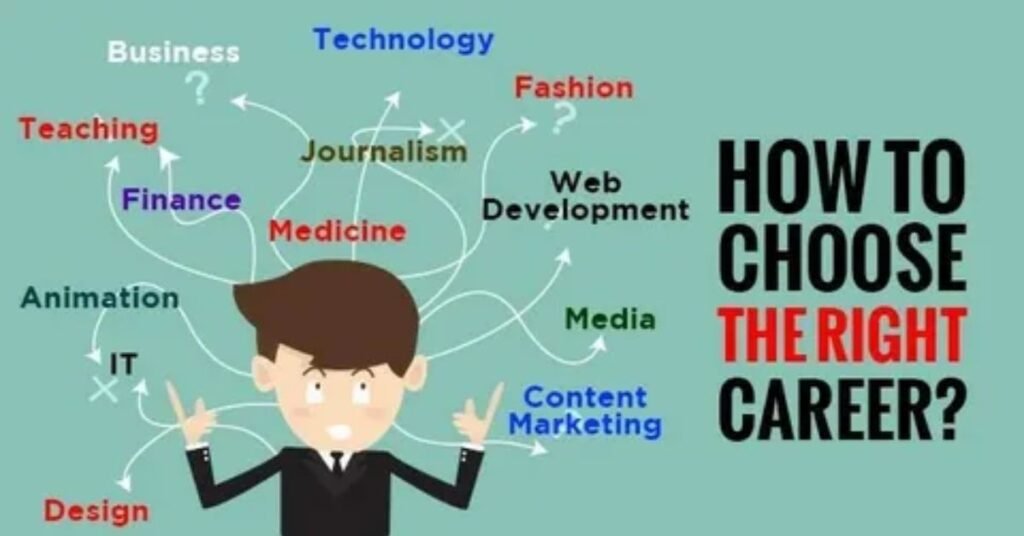
This process isn’t only for students or fresh graduates.
If you are already working and feeling stuck, this career evaluation method is equally powerful for career switchers.
Here’s how to apply it:
- List your current career’s pros and cons honestly
- Identify what you are missing most — is it money, purpose, flexibility, or growth?
- Research 2–3 alternative careers that address those gaps
- Analyze each alternative using the same framework
- Assess the transition cost — time, money, and effort required to switch
Many professionals discover through this process that they don’t need a complete career change.
The Role of Self-Awareness in Career Analysis
No career analysis tool works without self-awareness.
Before you analyze any career, you need to analyze yourself.
Ask these honest questions:
- What are my natural strengths?
- What kind of work energizes me — and what drains me?
- Do I prefer working alone or with a team?
- Am I motivated by money, impact, creativity, or stability?
- How much risk am I comfortable taking?
- What does my ideal workday actually look like?
Your answers will act as a filter. They will quickly eliminate careers that look good on paper but are completely wrong for your personality and values.
The best career evaluation is always built on honest self-knowledge first.
Conclusion
Choosing a career without analysis is like driving without a map. You might eventually get somewhere — but you’ll waste a lot of time, fuel, and energy getting there.
A proper pros and cons career analysis gives you something priceless: clarity.
Clarity about who you are. What you want. And which path is actually worth your time and energy?
In 2026, the professionals who thrive are not necessarily the most talented. They are the most intentional.
Be intentional. Do the analysis. Choose wisely. Your future self will thank you.
FAQs
What exactly are the pros and cons career analysis, and why is it important?
Pros and cons career analysis is the process of evaluating a career option by listing its advantages and disadvantages in a structured way. It’s important because it replaces emotional or impulsive decision-making with clear, logical thinking — helping you choose a path that fits your goals, lifestyle, and personality.
How long does a proper career analysis take?
It depends on how many options you are evaluating. For a focused analysis of two to three careers, most people can complete a thorough review in one to two weeks — including research, self-reflection, and weighing priorities.
Can I do a pros and cons career analysis if I am already employed?
Absolutely. In fact, this process is extremely valuable for professionals who feel stuck or are considering a career switch. It helps you evaluate whether the problem is your career field itself — or just your current role, company, or environment.
Should salary be the most important factor in career analysis?
Salary is important — but it should not be the only factor. Work-life balance, personal fulfillment, growth potential, and lifestyle fit all play a critical role in long-term career satisfaction. Many people earn high salaries but feel deeply unhappy because they ignore these other factors.
What if my pros and cons list is equal on both sides?
That’s very common. When the list is balanced, go back to your personal priorities. Ask yourself: which cons can I live with — and which ones would make me miserable? Your gut reaction to that question usually gives you a clearer answer than any spreadsheet.