
Software development is one of the fastest-growing fields in 2026. Whether you are a beginner or an experienced developer, understanding software development process models is essential. These models help teams plan, execute, and deliver software efficiently while reducing errors and delays.
In this guide, we will explore the main types of software development process models, their advantages, real-life examples, and practical tips to choose the right model for your project. By the end, you’ll have a clear roadmap to apply these models effectively in your software engineering career.
Overview of Software Development Process Models
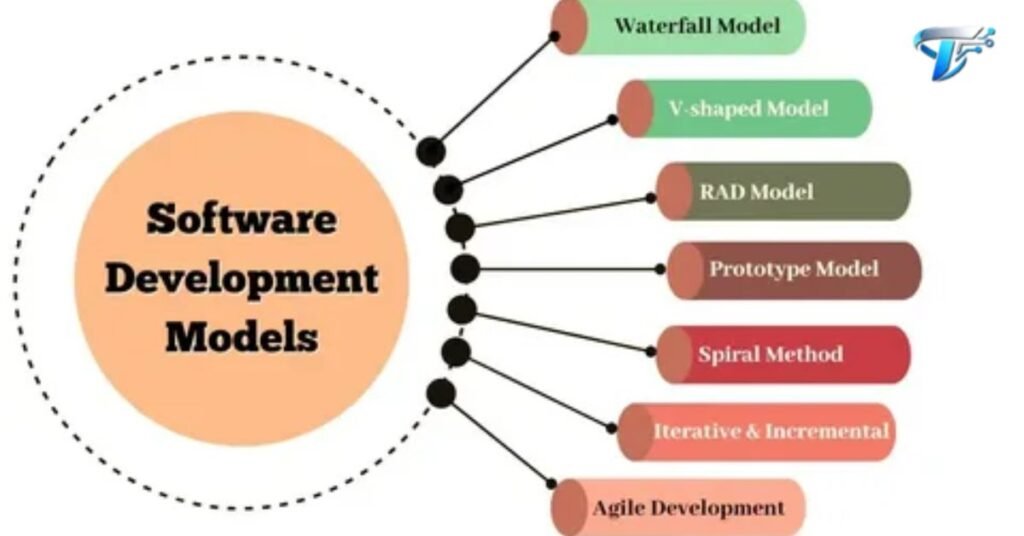
Software development process models are structured approaches to plan, design, build, and maintain software systems. They help teams manage tasks, reduce errors, and deliver quality products on time.
Some benefits of using proper models include:
- Clear roadmap from requirement analysis to deployment
- Efficient resource allocation
- Risk reduction and better project control
- Improved communication between team members
Common Software Development Process Models
There are multiple software development process models in software engineering, each with its unique workflow. The most widely used are:
1. Waterfall Model in Software Engineering
The Waterfall model is a linear and sequential approach. Each phase depends on the previous one.
Phases of the Waterfall Model:
- Requirement Analysis
- System Design
- Implementation
- Testing
- Deployment
- Maintenance
Pros:
- Simple and easy to understand
- Clear documentation for each phase
- Works well for small projects with fixed requirements
Cons:
- Not flexible for changes
- Late error detection
2. Agile Model
Agile is an iterative approach focusing on continuous improvement and customer feedback.
Key Features:
- Short development cycles called sprints
- Frequent collaboration with clients
- Prioritizes working software over documentation
Pros:
- Flexible to changes
- Faster delivery of functional software
- Higher customer satisfaction
Cons:
- Requires strong team communication
- Documentation may be minimal
Example: A company building a mobile app can release features every 2–3 weeks using Agile.
3. Scrum Model
Scrum is a type of Agile model. It focuses on small teams, roles, and time-boxed iterations.
Key Roles:
- Product Owner
- Scrum Master
- Development Team
Scrum Process:
- Sprint Planning → Daily Stand-ups → Sprint Review → Retrospective
Pros:
- Encourages teamwork and accountability
- Frequent product increments
- Adapts quickly to change
Cons:
- Can be challenging for large teams
- Requires experienced Scrum Master
4. Iterative Model
The Iterative model develops software in repeated cycles. Each iteration improves on the previous version.
Pros:
- Early detection of problems
- Flexible to requirement changes
- Frequent releases improve user feedback
Cons:
- Requires careful planning
- Can increase cost if not managed properly
5. Spiral Model
The Spiral model combines iterative development with risk analysis. It is suitable for large, complex projects.
Phases of the Spiral Model:
- Planning
- Risk Analysis
- Engineering
- Evaluation
Pros:
- Focus on risk management
- Can accommodate complex requirements
- Early prototyping
Cons:
- Can be expensive
- Requires risk expertise
Comparison of Popular Software Development Process Models
| Model | Approach | Flexibility | Best For | Key Advantage |
| Waterfall | Linear | Low | Small projects | Simple and structured |
| Agile | Iterative | High | Projects with changing needs | Fast delivery, customer-focused |
| Scrum | Agile-based | High | Team-based projects | Frequent increments, teamwork |
| Iterative | Cyclic | Medium | Projects needing early feedback | Gradual improvements |
| Spiral | Risk-focused | High | Large, complex projects | Risk management and prototyping |
Software Development Process Models Diagram
Including a diagram of process models helps visualize workflows. You can create diagrams in tools like PowerPoint or Lucidchart.
Example types:
- Waterfall diagram
- Agile sprint cycle
- Spiral model risk loops
Tips to Choose the Right Software Process Model
- Project Size: Small projects → Waterfall; Large projects → Spiral
- Requirement Stability: Stable → Waterfall; Changing → Agile/Scrum
- Team Expertise: Agile requires experienced developers
- Customer Involvement: High → Agile; Low → Waterfall
- Budget & Time Constraints: The spiral model can be costly, but it reduces risk
Additional Resources
- Software development process model PPT: Useful for training sessions
- Software development process models PDF: Offline reference material
- Software engineering process models tutorialspoint: Step-by-step tutorials
- Software development process models diagram: Visual understanding
Conclusion
Understanding software development process models is essential for every software engineer in 2026. Choosing the right model can improve productivity and efficiency, reduce risks and errors, and ensure the timely delivery of quality software. Whether you are a beginner learning Waterfall or an expert managing Agile and Scrum teams, mastering these models will strengthen your career in software engineering.
Start learning each model, practice real-life projects, and select the right model based on project needs. Applying these models effectively will help you succeed in software development and advance your skills step by step.
FAQs
What are the software development process models?
They are structured methods to plan, execute, and maintain software projects efficiently.
How many models of SDLC exist?
There are 7 commonly recognized models: Waterfall, Agile, Scrum, Iterative, Spiral, V-Model, and Prototype.
Which model is best for beginners?
Waterfall or Iterative models are easiest for beginners to understand.
Can Agile be used for large projects?
Yes, but it requires strong team coordination and experienced Scrum Masters.
Where can I find diagrams of software development process models?
You can find visual references of software development process models in textbooks, PDFs, and online tutorials for better understanding.