
Choosing the best programming language for web development is the first real decision every developer has to make — and it can either speed up your progress or slow you down for months. In 2026, the options are wider than ever, but a few languages clearly stand out based on demand, salary, and ease of learning.
Whether you are a complete beginner or an experienced developer looking to upgrade your skills, picking the right best programming language for web development will define how fast you grow, how much you earn, and what kind of projects you can build. This guide breaks it all down simply so you can choose confidently and start building right away.
What is Web Development?
Before diving into languages, it helps to understand what web development actually covers.
Web development means building websites and web applications. It has three main areas:
- Frontend — what users see and interact with (buttons, layouts, animations)
- Backend — the server, database, and logic running behind the scenes
- Full Stack — working on both frontend and backend together
Each area uses different languages and tools, which is why picking the best programming language for web development depends on which path you want to take.
Top 10 Programming Languages for Web Development in 2026
Here’s a quick overview of the most widely used languages right now:
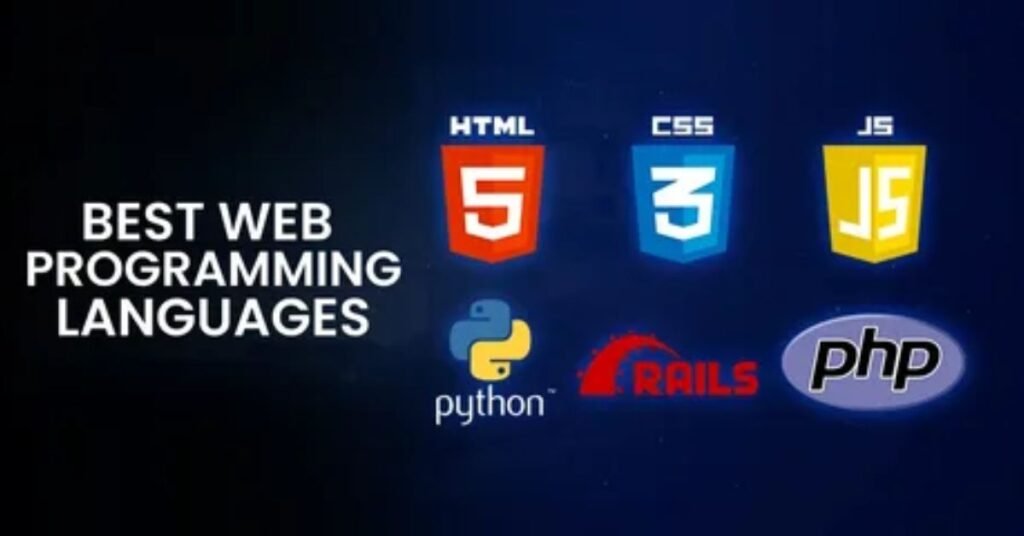
- JavaScript
- Python
- PHP
- TypeScript
- Java
- C#
- Ruby
- Go
- Swift
- Kotlin
All of these are actively used in the industry. But not all of them are equally beginner-friendly or equally in demand. Let’s look at the top 5 in detail.
Top 5 Best Programming Languages for Web Development
1. JavaScript – The King of Web Development
JavaScript is the most important language on the web — period. It is the only language that runs natively in every browser, which makes it essential for any developer.
What makes it special is that JavaScript works on both frontend and backend (through Node.js), so you can technically build an entire web application with just one language.
Why JavaScript is the best programming language for web development:
- Runs in every browser without any setup
- Used for interactive UI and dynamic content on the frontend
- Powers backend development through Node.js
- Largest developer community in the world
- Frameworks like React, Vue, and Angular are all JavaScript-based
Best for: Web apps, e-commerce sites, interactive websites, real-time applications
If you are starting from zero, JavaScript is where you should begin. No other language gives you this much flexibility across the full stack.
2. Python – Best for Beginners and Backend
Python is the most beginner-friendly language available today. Its syntax reads almost like plain English, which means you spend less time fighting the language and more time actually learning how to code.
Popular Python frameworks for web development:
- Django — full-featured, great for building large applications fast
- Flask — lightweight and flexible, good for smaller projects and APIs
Why Python stands out:
- Cleanest, simplest syntax of any major language
- Backed by Google, Instagram, and Pinterest (all built on Python)
- Excellent for data-heavy web applications
- Strong job market in 2026
Python is widely considered the best programming language for web development for anyone who wants a gentle entry into coding.
3. PHP – Still Powering the Web
PHP has been declared “dead” for years — yet it still powers over 75% of all websites on the internet, including WordPress. It is not going anywhere.
Why PHP still matters:
- WordPress, Drupal, and Joomla are all PHP-based
- Very affordable hosting options available everywhere
- Easy to learn for backend beginners
- Large existing codebase in the job market
If your goal is to build WordPress websites or work on existing CMS-based projects, PHP remains a very practical choice.
4. TypeScript – The Modern JavaScript Upgrade
TypeScript is JavaScript with added structure. It was created by Microsoft to solve one of JavaScript’s biggest problems — unpredictable errors in large codebases.
Why TypeScript is growing fast:
- Catches errors before your code even runs
- Makes large projects much easier to manage
- Fully compatible with existing JavaScript code
- Now used by most major tech companies
If you already know JavaScript, learning TypeScript is a natural next step and makes you significantly more hireable in 2026.
5. Java – Powerful for Enterprise and Large Systems
Java has been around for decades and is still one of the most used languages in enterprise software, banking systems, and large-scale web applications.
Why Java is still relevant:
- Extremely stable and secure
- Used by banks, government systems, and large corporations
- Strong typing makes it reliable for critical applications
- Android app development also uses Java
Java is not the easiest to start with, but if your goal is enterprise-level web development, it is one of the most in-demand skills you can have.
Choosing a language is only half the decision — the framework you pair it with matters just as much. For a deeper look at how different languages and frameworks compare for real projects, this guide on the best programming language for web development breaks it down well with practical examples.
Frontend vs Backend Languages — Quick Reference
| Type | Languages |
| Frontend | HTML, CSS, JavaScript, TypeScript |
| Backend | Python, PHP, Java, Node.js, Ruby |
| Full Stack | JavaScript, Python, PHP |
Understanding this table helps you map out your learning path clearly. If you want to go deeper into backend-specific options, this guide on the best programming language for web development backend covers it in detail.
Best Programming Language for Web Applications
Building a web app is different from building a static website. Apps need real-time data, user authentication, databases, and APIs. Here’s what works best for each scenario:
- JavaScript (React + Node.js) → Best for dynamic, real-time web apps
- Python (Django) → Best for fast backend development with lots of data
- Java → Best for large-scale, high-security applications
- PHP → Best for CMS-based and content-heavy applications
The best programming language for web development of web apps in 2026 is still JavaScript for most use cases — but Python is closing the gap fast.
Best Languages for Web Design (Frontend Focus)
If you are focused on the visual side of websites — layouts, animations, and user interfaces — here’s what you need:
- HTML — structure and content of every web page
- CSS — design, colors, typography, and layout
- JavaScript — interactivity, animations, and dynamic content
These three work together as a package. You cannot do frontend development without all three. JavaScript is the best programming language for web development on the client side.
Is HTML or Python Better for Web Development?
This is a common question among beginners, but it compares two very different things.
HTML is not technically a programming language — it is a markup language used to structure content on a webpage. Every website uses HTML, no exceptions.
Python is a full programming language used for backend logic, databases, and server-side operations.
The short answer: you need both. HTML builds the structure the user sees, and Python handles everything happening behind the scenes. They do not compete — they work together.
Will AI Replace Web Developers?
AI tools like GitHub Copilot and ChatGPT can help developers write code faster, but they cannot replace the judgment, creativity, and problem-solving that a real developer brings to a project.
What AI does is speed up repetitive tasks — it still needs a developer to direct it, review its output, and fix its mistakes. If anything, developers who learn to use AI tools alongside their coding skills will become more valuable, not less.
Learning the best programming language for web development is still one of the smartest career moves you can make in 2026.
What Skills Do You Need Alongside a Programming Language?
Knowing a language is only part of the picture. To become job-ready or freelance-ready, you also need:
- Problem-solving ability — breaking down a task into logical steps
- Version control — Git and GitHub are non-negotiable
- Framework knowledge — React, Django, Laravel depending on your path
- Basic communication — especially important for freelancing
- Portfolio of real projects — this matters more than any certificate
How to Start Web Development (Step-by-Step)
Step 1 — Learn the Basics Start with HTML and CSS to understand how web pages are structured. Then move to JavaScript.
Step 2 — Choose Your Path Decide if you want to focus on frontend, backend, or full stack. This determines which language you go deeper into.
Step 3 — Pick a Framework Once you know a language, learn its most popular framework — React for JavaScript, Django for Python, Laravel for PHP.
Step 4 — Build Real Projects Build a portfolio website, a blog, a simple e-commerce page. Real projects matter more than course certificates.
Step 5 — Start Earning Create profiles on Fiverr and Upwork. Apply for internships or junior developer roles. Your portfolio does the talking.
If you’re based in Pakistan and looking for structured training, check out the best web development courses in Karachi 2026 to find the right course for your skill level and budget.
Quick Comparison — Which Language Should You Choose?
| Goal | Best Language |
| Complete beginner | JavaScript or Python |
| Frontend development | JavaScript + TypeScript |
| Backend development | Python or PHP |
| Full stack | JavaScript (Node.js + React) |
| Enterprise/large systems | Java or C# |
| WordPress development | PHP |
| Data-heavy web apps | Python |
Conclusion
There is no single “best programming language for web development” for everyone — it depends on your goals, your timeline, and what kind of work you want to do.
That said, JavaScript is the safest and most versatile starting point for most people. It works on the frontend and backend, has the largest community, and is in demand across every type of web project. If you’re more drawn to simplicity and backend work, Python is an excellent choice.
The most important thing is to pick one language, commit to it, and build real projects. Switching languages every few weeks is the biggest mistake beginners make.
Choose your language today, follow the step-by-step plan above, and build your first project this week. That single step will put you ahead of most people who are still deciding.
FAQs
What is the best programming language for web development in 2026?
JavaScript is the top choice for most developers because it works for both frontend and backend development. Python is the best option for beginners who want simple syntax and backend-focused work.
Is Python good for web development?
Yes. Python is beginner-friendly, widely used in the industry, and powers some of the world’s biggest websites through frameworks like Django and Flask.
Which language is best for backend web development?
Python, PHP, Java, and Node.js are the most popular backend languages in 2026. Python and Node.js are currently the most in-demand for new projects.
Can I learn web development in 3 months?
Yes, you can learn the basics of HTML, CSS, and JavaScript in 3 months with consistent daily practice. Becoming job-ready typically takes 6–12 months depending on how much you build.
Do I need a degree to become a web developer?
No. Most employers and freelance clients care about your portfolio and practical skills, not your degree. Many successful developers are self-taught or completed short courses.