
In today’s fast-moving digital world, businesses cannot afford to rely on generic, one-size-fits-all software. Every company has its own processes, its own customers, and its own challenges. Using software that was built for the masses means constantly working around its limitations instead of focusing on growing your business.
That is exactly why custom software development has become one of the most important investments a business can make in 2026. From small startups in Lahore to large enterprises in New York, companies across every industry are turning to custom software development to solve real problems, automate their workflows, and stay ahead of the competition.
In this guide, you will learn what custom software development is, how it works, how much it costs, and why it might be the smartest decision your business makes this year.
What is Custom Software Development?
Custom software development is the process of designing, building, testing, and maintaining software that is created specifically for one business or a specific group of users. Unlike off-the-shelf software — which is built for a general audience and sold to thousands of different companies — custom software is built entirely around your unique needs, goals, and workflows.
According to IBM, software development is the process of creating, designing, deploying and supporting software to meet specific user needs and business objectives — and custom software development takes this a step further by tailoring every feature specifically for one business.
Think of it this way: off-the-shelf software is like buying a ready-made suit from a store. It might fit reasonably well, but it will never be a perfect fit. Custom software is like having a suit tailored specifically for you — every measurement is taken, every detail is designed with you in mind, and the end result fits perfectly.
Instead of adjusting your business processes to fit the software, the software is built to fit your business processes. This is the fundamental advantage of custom software development.
Real-World Examples of Custom Software
• A hospital building its own patient management system that connects doctors, nurses, pharmacists, and billing in one platform
• An e-commerce business creating a custom order tracking and inventory system tailored to their specific product categories
• A school developing a learning management system with features designed specifically for their curriculum and teaching style
• A logistics company building a real-time delivery tracking app for both their drivers and customers. Learn more about mobile app development in Pakistan to understand how apps are built for real businesses.
• A Pakistan-based textile company creating custom ERP software to manage their export orders, fabric inventory, and supplier payments
7 Key Benefits of Custom Software Development
Why do so many businesses choose custom software over ready-made solutions? Here are the seven most important benefits that make custom software development worth the investment.
1. Perfectly Tailored to Your Business Needs
The biggest advantage of custom software is that it is built specifically for your business. Every feature, every button, every workflow is designed around how your team actually works. You do not pay for features you will never use, and you are never forced to change your processes just to match what a software package can do. This level of precision leads to higher productivity, fewer errors, and a much smoother daily operation for your entire team.
2. Stronger Security and Data Protection
Off-the-shelf software is a common target for hackers because it is widely used and its vulnerabilities are well known. Custom software, on the other hand, is built with your specific security requirements in mind. You control exactly who has access to what data, how data is stored and encrypted, and how the system responds to threats. For businesses that handle sensitive customer information, financial records, or proprietary data, this level of security is not optional — it is essential.
3. Seamless Integration with Your Existing Tools
Most businesses already use a variety of tools — accounting software, CRM systems, communication platforms, and more. Custom software can be built to integrate directly with all of these existing systems, creating a seamless flow of data across your entire operation. This eliminates the need for manual data entry, reduces errors, and saves your team hours of repetitive work every single week.
4. Scalability as Your Business Grows
When your business grows, your software needs to grow with it. Off-the-shelf software often hits a ceiling — it can only handle so many users, so much data, or so many transactions before it starts slowing down or breaking. Custom software is built with scalability in mind from day one. You can add new features, expand to new markets, or increase your user base without having to switch to an entirely new system. This makes custom software a long-term investment rather than a short-term fix.
5. Competitive Advantage in Your Industry
When every business in your industry uses the same off-the-shelf software, none of them has a real advantage over the others. Custom software gives you tools that your competitors simply do not have. Whether it is a faster checkout process, a smarter recommendation engine, or a more efficient supply chain system, custom software can become one of your most powerful competitive weapons. To promote your custom software online effectively, check out our guide on what is SEO in digital marketing.
6. Lower Long-Term Costs
Many businesses shy away from custom software because of the higher upfront cost. However, when you calculate the total cost over three to five years, custom software is often more cost-effective than off-the-shelf alternatives. With ready-made software, you typically pay recurring monthly or annual subscription fees, plus extra charges for premium features, additional users, and integrations. Custom software has a one-time development cost, and after that, you own it completely with no ongoing licensing fees.
7. Full Ownership and Control
When you build custom software, you own it. You are not dependent on a third-party vendor’s decisions about pricing, features, or support. If a software company decides to discontinue a product or change its pricing model, businesses using that software are stuck. With custom software, you have complete control over the product, its data, and its future development. You decide what gets built, when it gets updated, and how it evolves.
The Custom Software Development Process — Step by Step
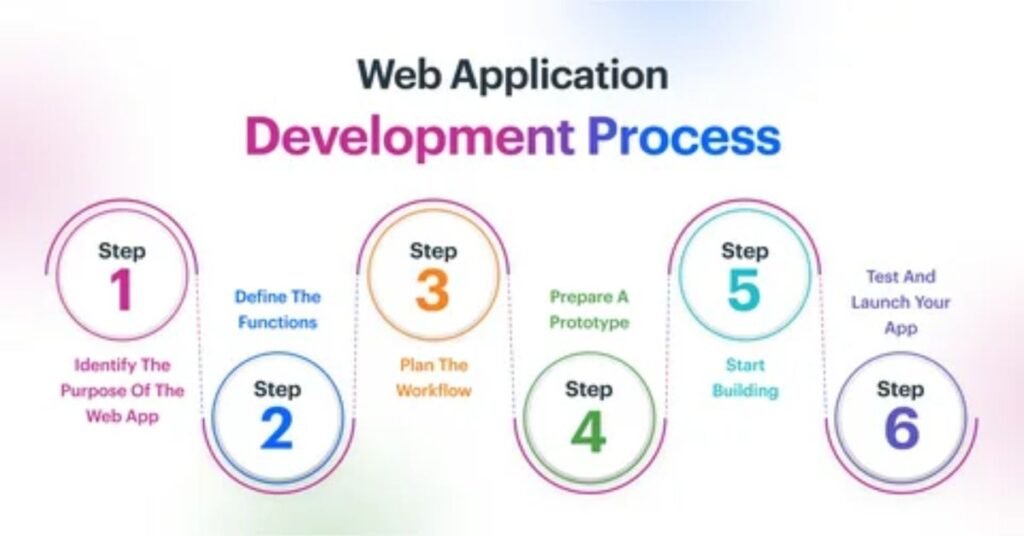
Building custom software is not just about writing code. It involves a structured process that ensures the final product actually solves the right problems and works reliably in the real world. Here is how a professional custom software development company typically approaches a project:
| Step | Phase | What Happens |
| 1 | Requirement Analysis | The development team meets with the client to understand their business goals, challenges, and specific requirements |
| 2 | Planning & Strategy | A detailed project roadmap is created, including timelines, technology choices, and feature priorities |
| 3 | UI/UX Design | Designers create wireframes and visual prototypes so the client can see exactly what the software will look like before a single line of code is written |
| 4 | Development | Developers begin building the software, usually in sprints so the client can review progress regularly |
| 5 | Testing & QA | The software is thoroughly tested to find and fix bugs, ensure performance, and verify that all features work correctly |
| 6 | Deployment | The finished software is launched and integrated into the client’s existing systems and workflows |
| 7 | Maintenance & Updates | The development team continues to monitor, update, and improve the software as the business’s needs evolve |
Following this structured process is what separates professional custom software development companies from freelancers or low-quality vendors. Skipping any of these steps — especially the requirement analysis and testing phases — is one of the most common reasons software projects fail.
How Much Does Custom Software Development Cost in 2026?
Cost is often the first question businesses ask when they start exploring custom software. The honest answer is that it depends on many factors — the complexity of the project, the number of features, the technology used, and where your development team is located.
| Project Type | Estimated Cost (USD) | Timeline | Best For |
| Simple App or Tool | $5,000 – $15,000 | 1 – 3 months | Startups and small businesses with basic needs |
| Medium Complexity Application | $15,000 – $50,000 | 3 – 6 months | Growing businesses with multiple integrations |
| Advanced Enterprise Software | $50,000 – $200,000+ | 6 – 18 months | Large companies with complex workflows |
| MVP (Minimum Viable Product) | $8,000 – $25,000 | 2 – 4 months | Startups testing a new product idea |
For businesses in Pakistan, working with a local development team can significantly reduce costs while still delivering high-quality results. Many Pakistani software companies offer world-class development services at a fraction of the cost of US or European firms.
Choosing the Right Development Partner: USA vs India vs Pakistan
One of the biggest decisions in any custom software project is choosing where to find your development team. Each region offers different advantages depending on your budget, timeline, and communication needs.
| Region | Average Cost | Quality | Communication | Best For |
| USA | High ($150–$250/hr) | Very High | Excellent | Enterprise projects with large budgets |
| India | Low ($25–$60/hr) | Good to High | Good | Startups and cost-conscious businesses |
| Pakistan | Low ($20–$55/hr) | Good to High | Good | Local businesses and international clients |
| Eastern Europe | Medium ($50–$100/hr) | High | Very Good | Mid-size projects needing quality |
Pakistan’s software industry has grown enormously in recent years. Cities like Lahore, Karachi, and Islamabad have thriving tech communities with skilled developers who work with international clients daily. If you are a Pakistani business looking for affordable custom software, local companies are an excellent choice.
Custom Software Development for Small Businesses
Many small business owners assume that custom software is only for large corporations with massive budgets. This is a common misconception. In reality, custom software can be one of the most powerful growth tools available to small businesses — and thanks to modern development approaches like MVP (Minimum Viable Product), it is more accessible than ever.
An MVP is a simplified version of your software that includes only the core features needed to solve your main problem. You launch it, gather real user feedback, and then gradually add more features based on what your customers actually need. This approach dramatically reduces the initial investment and ensures you are building something people actually want to use.
How Small Businesses Benefit from Custom Software
• Automates time-consuming manual tasks like invoicing, inventory tracking, and appointment scheduling
• Reduces human errors that cost money and damage customer relationships
• Provides a better customer experience through personalized features and faster service
• Grows with the business without requiring a completely new system every few years
• Gives small businesses the same operational efficiency as much larger competitors
Common Mistakes to Avoid in Custom Software Development
Custom software projects fail more often than they should — not because the technology is bad, but because of poor planning and decision-making. Here are the most common mistakes businesses make and how to avoid them:
• Not defining clear requirements before development begins — vague requirements lead to software that does not actually solve your problem
• Choosing the cheapest developer without checking their portfolio or references — low cost often means low quality and expensive fixes later
• Skipping the testing phase to save time — untested software will have bugs that frustrate users and damage your reputation
• Poor communication with the development team — regular check-ins and clear feedback are essential for staying on track
• Not planning for maintenance and updates — software requires ongoing care to stay secure and functional as your business evolves
• Trying to build everything at once — start with core features and add more over time based on real user feedback
How to Choose the Right Custom Software Development Company
Finding the right development partner is one of the most important decisions in your entire software project. Check out our guide on software development companies in Pakistan to find the best development partner for your project. Here are the key factors to evaluate before signing any contract:
• Portfolio and past projects: Look for companies that have built software similar to what you need. Ask for live demos or case studies
• Client reviews and testimonials: Check platforms like Clutch, GoodFirms, or Google Reviews to see what previous clients say about their experience
• Technical expertise: Make sure the team has experience with the specific technologies your project requires
• Communication style: A good development partner communicates clearly, responds quickly, and keeps you updated throughout the project
• Post-launch support: Ask what kind of maintenance and support they offer after the software is delivered
• Transparent pricing: A trustworthy company will give you a clear breakdown of costs with no hidden fees
Actionable Tips for a Successful Custom Software Project
• Start by documenting your current workflows in detail — the more clearly you can explain your processes, the better the software will be
• Involve your actual team members in the planning process — the people who will use the software every day often have the best insights
• Set realistic timelines and do not rush the development process — quality software takes time
• Plan your budget with a 15–20% buffer for unexpected changes or additional features
• Always ask for regular progress updates and review working demos throughout development
• Think long-term — choose a development partner you can work with for years, not just for one project
Conclusion
Custom software development is no longer a luxury reserved for large corporations. In 2026, it is a practical and powerful solution for businesses of all sizes that want to operate more efficiently, serve their customers better, and grow without limitations.
Whether you are a small business owner in Pakistan looking to automate your daily operations or a growing company that needs a scalable platform to support your expansion, custom software can be the competitive advantage that sets you apart.
The key is to plan carefully, choose the right development partner, and approach the project with a long-term mindset. When done right, custom software becomes one of the most valuable assets your business will ever own.
Frequently Asked Questions (FAQs)
What is custom software development?
Custom software development is the process of building software that is specifically designed for one business or organization. Unlike off-the-shelf software, it is tailored to your unique workflows, goals, and requirements rather than being built for a general audience.
How much does custom software development cost in Pakistan?
In Pakistan, custom software development costs typically range from PKR 500,000 for simple applications to several million rupees for complex enterprise systems. Costs depend on the project’s complexity, number of features, and the experience level of the development team.
How long does it take to build custom software?
The timeline depends on the complexity of the project. A simple application can be built in one to three months, while a medium complexity system typically takes three to six months. Large enterprise software projects can take anywhere from six months to over a year.
Is custom software better than off-the-shelf software?
It depends on your specific needs. If your business has unique processes that standard software cannot handle well, custom software is almost always the better long-term choice. It offers better security, scalability, and a perfect fit for your workflows. However, for very simple or common needs, off-the-shelf software may be sufficient.
Can small businesses afford custom software development?
Yes, especially with the MVP approach. Starting with a Minimum Viable Product allows small businesses to get functional custom software at a much lower initial cost and then add features gradually as the business grows and generates revenue.
What are the risks of custom software development?
The main risks include cost overruns, missed deadlines, and software that does not meet expectations. These risks can be minimized by choosing an experienced development partner, defining your requirements clearly before development begins, and maintaining regular communication throughout the project.